Vertical jump test: measure your jump height with your iPhone
Measure your vertical jump with TouchTally: the iPhone camera counts each jump and works out its height from flight time, or from AR body tracking if supported.
Short answer
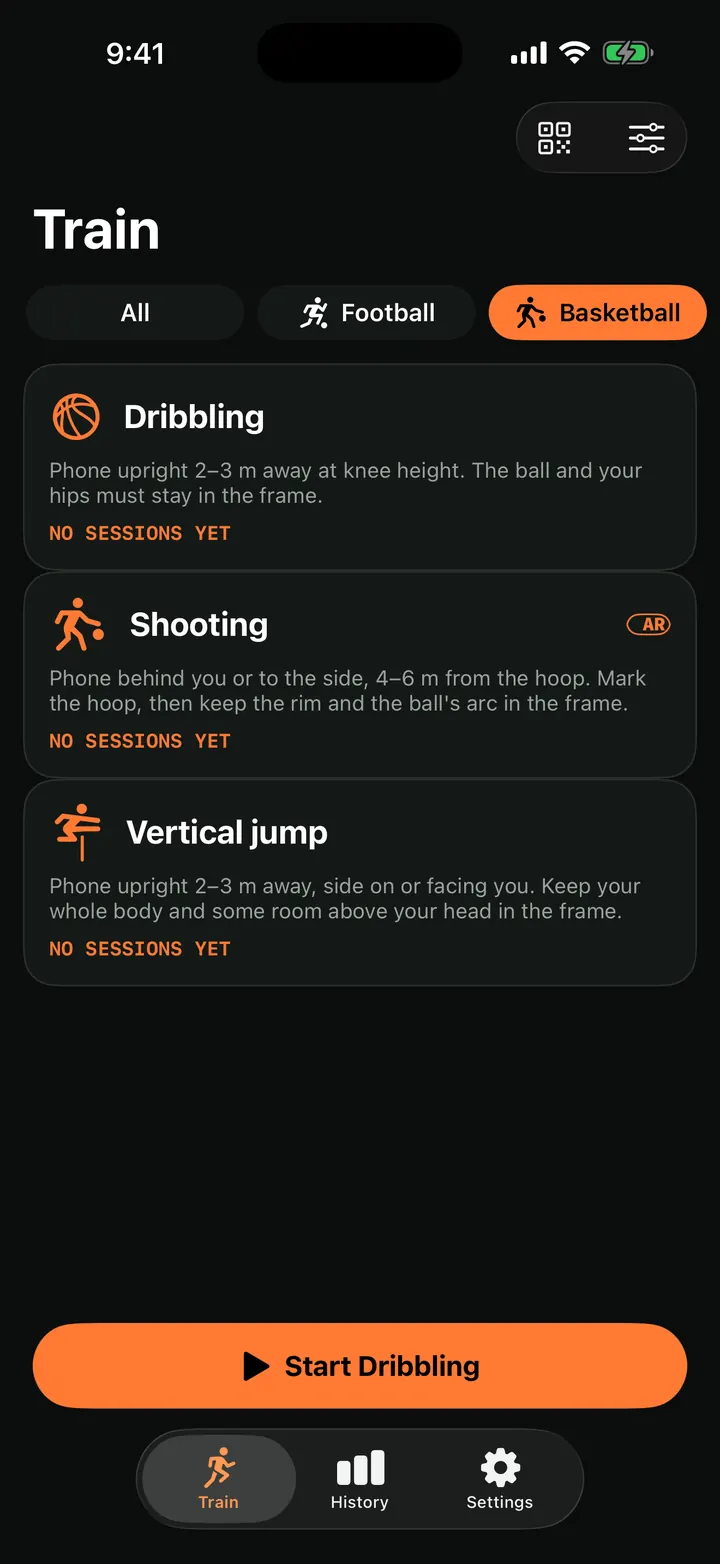
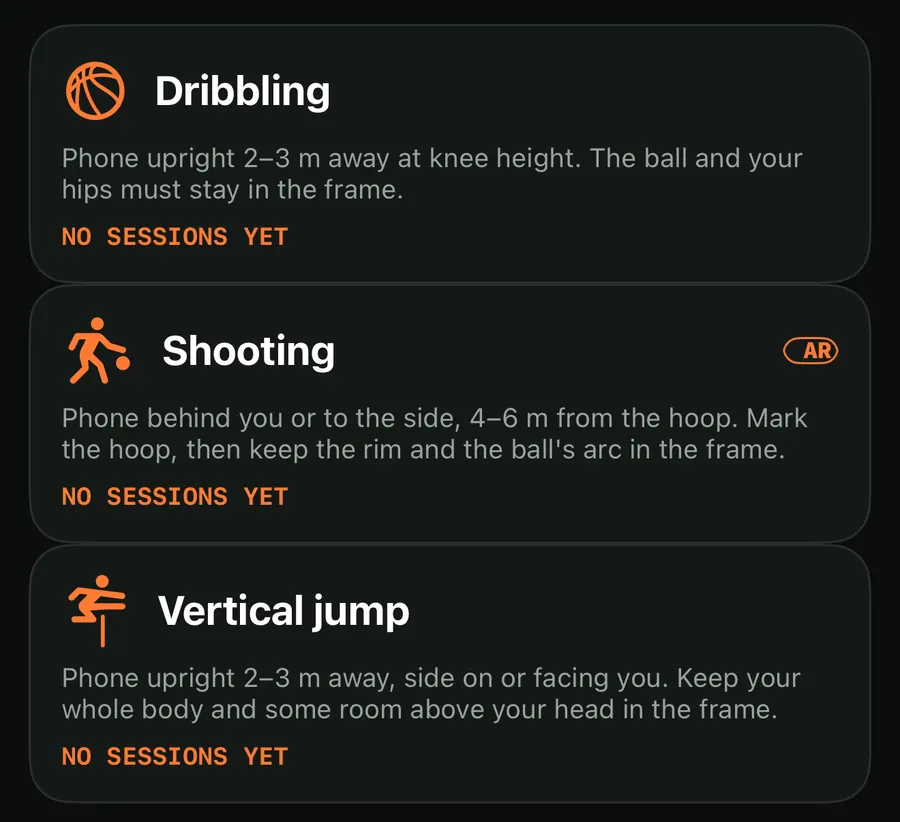
TouchTally's Vertical jump drill counts your jumps with the iPhone camera and gives each one a height in centimetres. On most iPhones the height is worked out from how long you were in the air. On iPhones that support AR body tracking, it can measure how far your hips rise instead. Vertical jump is a Pro drill, listed under both Basketball and Volleyball.
A jump test usually needs a wall, chalk and a friend with a tape measure. TouchTally lets you do a quick version on your own: stand the phone up, jump a few times and see your last and best heights on screen.
Two ways TouchTally measures a jump
From flight time (any iPhone)
The camera follows your body and watches your ankles. While you stand still, TouchTally learns where your feet rest. Takeoff is the moment your ankles rise clearly above that level, and landing is when they come back down. The time in between is your flight time.
Height then comes from a standard physics formula: a body in the air for a time T rises g × T² ÷ 8, where g is gravity. A flight of half a second works out to about 31 cm (12 in).
To keep the count clean, a jump only counts if the flight lasts between 0.15 and 1.2 seconds, and both ankles have to be visible. Small hops and steps are ignored, and so are moments when the camera loses your feet.
With AR body tracking (supported iPhones)
On an iPhone that supports ARKit body tracking, using the back camera, TouchTally can measure your hip height in metres instead. A jump counts when your hips rise more than 6 cm (about 2.4 in) above where they rest, and the height is how far your hips rose at the top of the jump. During setup you see the hint "AR measures your jump height in centimetres."
AR is used when "Place targets with AR" is on in Settings (it is on by default for Pro), you are using the back camera and your iPhone supports it. Otherwise TouchTally uses flight time.
Run a vertical jump test
Measure your jump height
- Open TouchTally, tap Basketball (or Volleyball) and pick Vertical jump.
- Stand the phone upright 2–3 m (about 7–10 ft) away, side on or facing you.
- Keep your whole body and some room above your head in the frame, so your feet stay in view at the top of the jump.
- Wait for the setup checklist to turn green, then tap Start.
- Stand still for a moment so TouchTally can see where your feet rest, then jump.
- After each landing, the screen shows "Last 42 cm · Best 45 cm" style text with your latest and best jumps.
- Tap Stop when you are done. The session is saved to History.
What you see
During the session, the count shows JUMPS in large type and the chart under the video follows your ankle height, so each jump is one clear spike. The line under the video shows your last and best heights after every jump.
When you stop, the result has a "Jump height" card with two rows:
| Row | What it shows |
|---|---|
| Best | Your highest jump in the session, in cm |
| Average | The mean height of all counted jumps, in cm |
Your sessions go into History with your other drills, so you can see whether your best is moving over time. See training history and records.
If a jump was missed, or a step was counted as a jump, open the replay and step through each one. With Pro you can add or delete jumps by hand. See replay and fix your count.
Where it fits in a session
A few max jumps at the start of a basketball or volleyball session give you a quick check on how fresh you feel. Pair it with the dribble counter for ball work, or the shot tracker for makes and misses.
How does TouchTally measure vertical jump height?
On most iPhones it times how long your feet are off the ground and works out the height from that flight time. On iPhones with AR body tracking and the back camera, it can measure how far your hips rise instead.
Is the vertical jump test free?
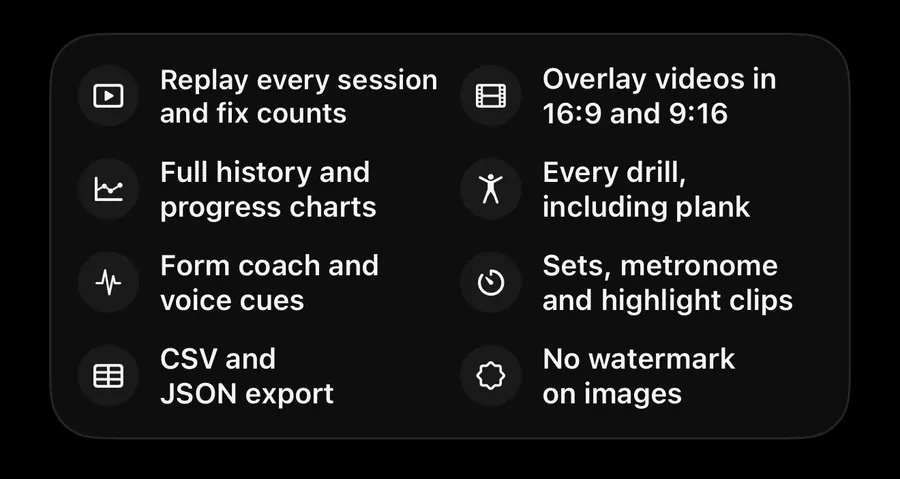
No. Vertical jump is one of the Pro drills. Dribbling, also listed under Basketball, is free.
Where should I put my phone for a jump test?
Upright, 2–3 m away, side on or facing you. Keep your whole body and some room above your head in the frame.
Why is my jump higher than a wall test?
With the flight-time method, tucking your knees or landing low keeps you in the air longer, which reads as a higher jump. Land with straight legs for a fairer number.
Can I use it for volleyball?
Yes. Vertical jump is listed under both Basketball and Volleyball, and it works the same in both.
Keep reading
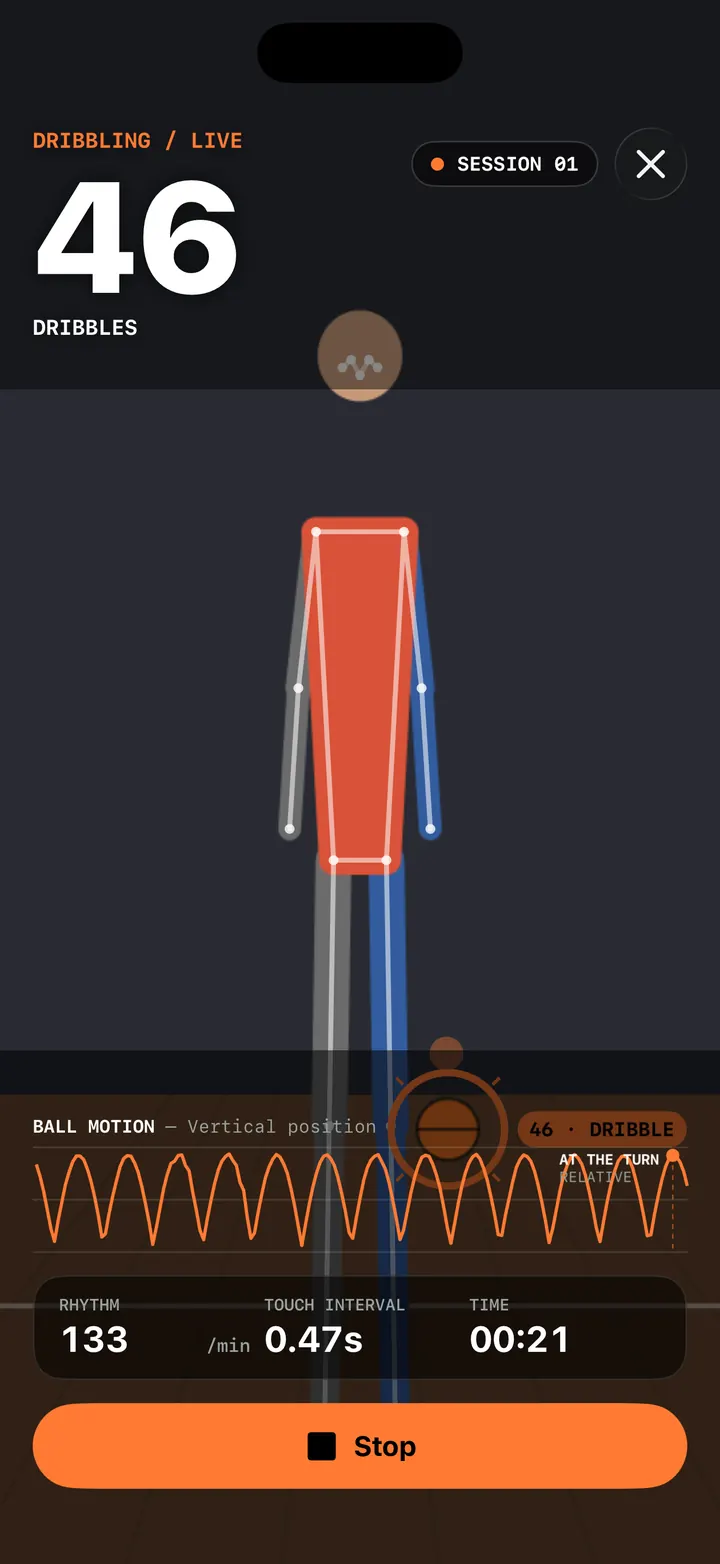
Basketball dribble counter: count dribbles with your iPhone or Apple Watch
Count basketball dribbles with TouchTally: set the iPhone at knee height, see rhythm and best streak, and with Pro count dribbles at the wrist on Apple Watch.
Read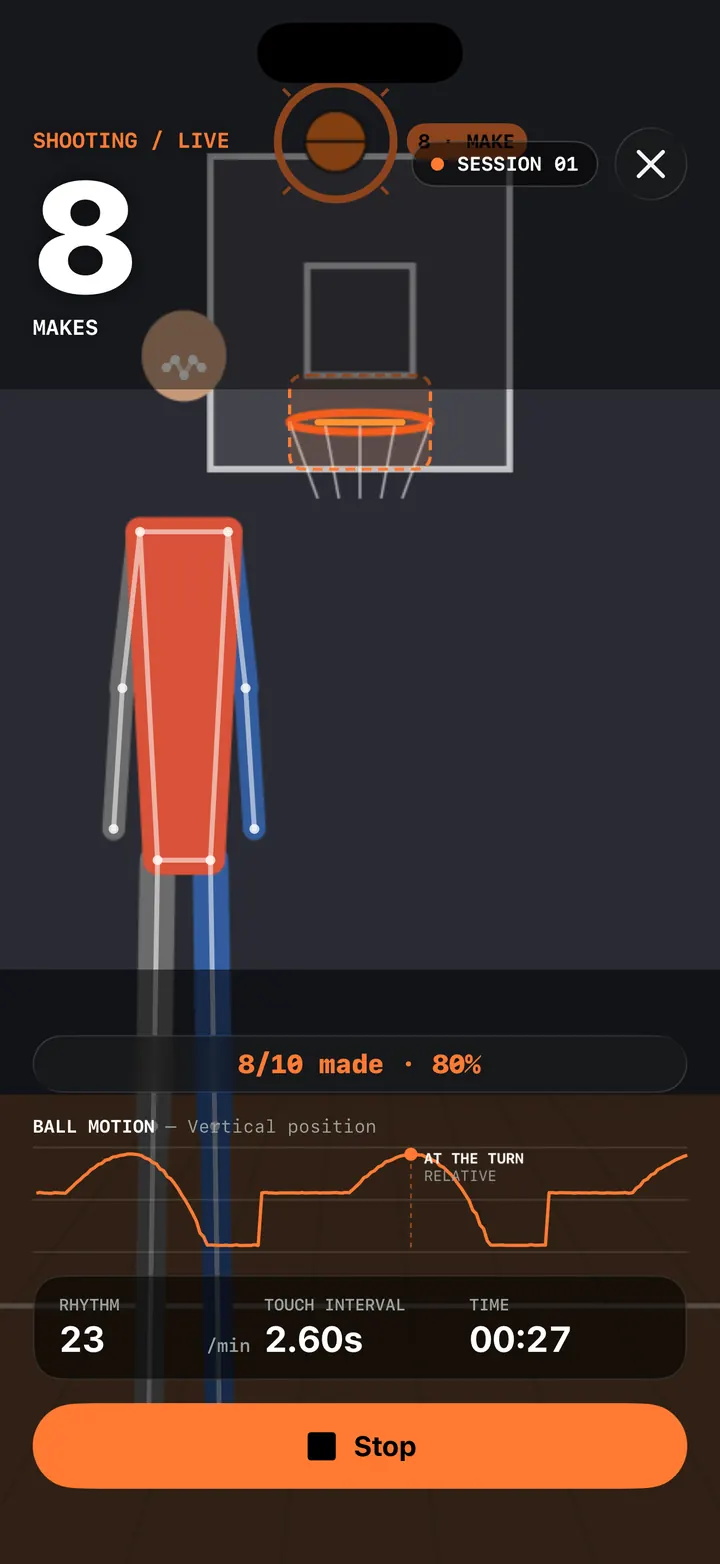
Basketball shot tracker: count makes and misses with AR hoop placement
TouchTally's Shooting drill counts makes and misses from the iPhone camera. Tap the rim to place the hoop with AR, then shoot and see made, missed and your %.
Read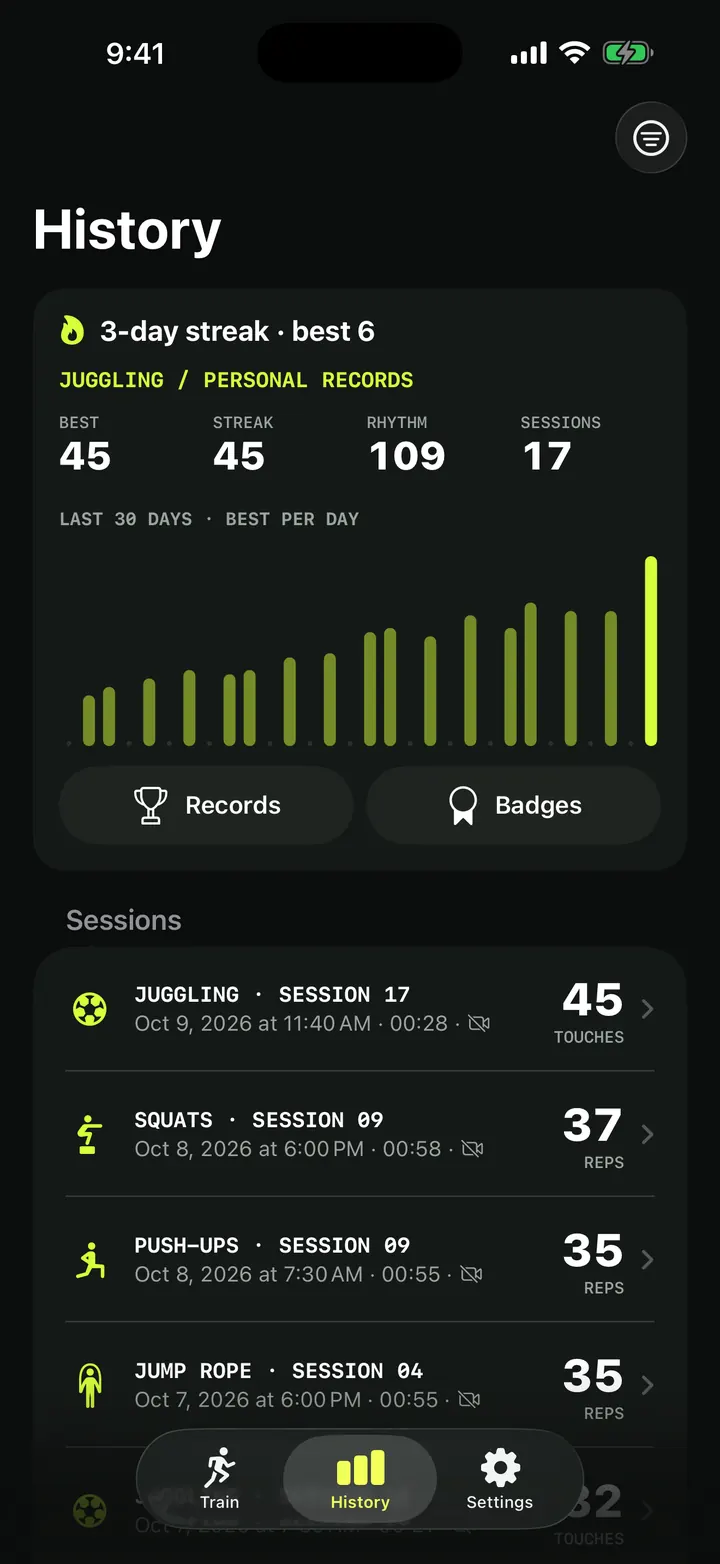
Training history and personal records: every session in one place
How TouchTally's History tab works: the streak line, personal records per drill, the 30-day best-per-day chart, filters, session list and the iPad layout.
ReadCount jump rope, push-ups and squats with your phone
Where to put your phone for each TouchTally drill, how jump rope can be counted by the sound of the rope, and how sets, rest and form feedback work.
Read guide